

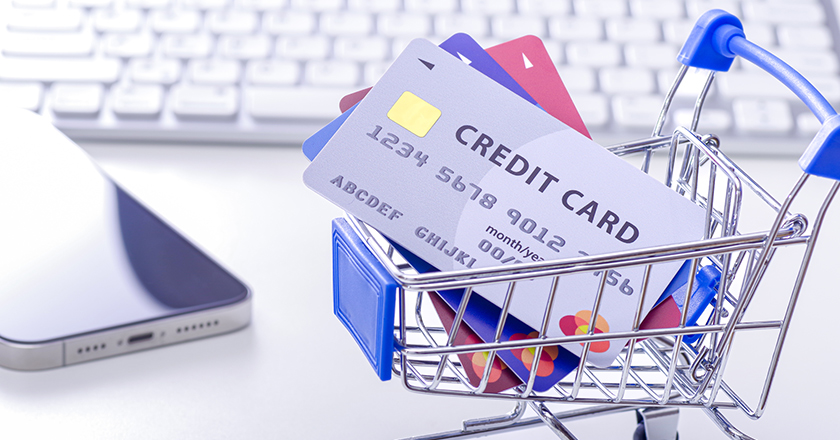
No cooling-off period for mail-order purchases in Japan
Giant digital platforms such as Amazon and Rakuten have increasingly dominated the e-commerce market, and countries around the world have been discussing how they should be regulated. However, in Japan, consumer protection in e-commerce has not been a major topic of discussion, leaving the foundations underdeveloped.
Therefore, my recent research focuses on sorting out consumer protection issues in e-commerce and analyzing the problems of digital platforms.
E-commerce enables businesses to reach customers worldwide, with minimal costs for establishing a website. Consequently, even though the amount of damage in each case is small, this type of transaction tends to affect a large number of consumers. Also, the Japanese Civil Code, like those of other major developed countries, was originally designed with retail sales in physical stores in mind. However, since electronic commerce is a form of mail-order sales, applying its provisions directly leads to various issues.
Japan is particularly lagging behind other countries in protecting consumers in mail-order sales. We can see it in the laws regarding return policies.
In the 1970s, unscrupulous business practices that forced people to buy expensive goods through door-to-door sales became a social problem. In response, Japan also instituted the cooling-off system that allowed people to unconditionally cancel contracts within a certain period of time. Although a series of laws and regulations have developed to curb malicious door-to-door sales (hard-sell tactics), the cooling-off system does not apply to mail-order sales. As a result, consumers cannot return goods if the advertisement clearly states that product returns are not accepted.
On the other hand, looking at overseas countries, the EU, a European economic bloc, introduced the cooling off system for mail-order sales in the 1990s. Since the 1990s, the EU issued directives on mail-order sales and e-commerce transactions to ensure consistency among the domestic laws of member countries in cross-border sales and purchases.
In Japan, even before the widespread use of the Internet, mail-order sales through catalogs, magazine advertisements, TV shopping channels and other media were popular. The fact that the cooing-off period does not apply to mail-order sales has been seen as less serious issue compared to hard-sell tactics, possibly because many mail-order retailers voluntarily accept product returns. In other words, consumers have been helped by generous businesses that care about their customers.
However, since the late 1990s, as e-commerce became more common in mail-order shopping, more and more dubious vendors have emerged on the Internet. From the perspective of unscrupulous business operators, an online shopping business can be easily started by simply establishing a website. It requires less labor and costs than door-to-door shopping, and they are not obligated to accept product returns since the cooling-off period does not apply in Japan. In this context, the Japanese e-commerce market could be an easy target for rogue vendors around the world.
Consumer issues with online cashless payments
Yet, the Japanese government was not just looking on at this situation: The “statutory return policy” was introduced in the revision of the Act on Specified Commercial Transactions in 2008. Under this policy, if a business operator specifies a special agreement about whether product returns are allowed and under what conditions, customers must comply with those terms. However, if the business operator does not state the agreement clearly, consumers can cancel the sales contract within eight days after the delivery of the products. However, under the statutory return policy, business operators are not obligated to accept product returns if they have clearly stated in their advertisements that “returns are not accepted.” The policy is similar, but not exactly the same as the cooling-off system, which prohibits the refusal of returns based on special agreements, so problems with product returns have continued to occur.
In addition, online shopping procedures, which proceed just with a click, frequently cause consumers to make a wrong purchase. One-click billing fraud continues to occur, tricking consumers into clicking URLs or banners, with messages like “Thank you for your purchase.”
Legally, the first issue is whether a consumer’s screen error can be recognized as a “mistake” under Article 95 of the Civil Code, thereby entitling the consumer to rescind a manifestation of intention. Fundamentally, a contract is an agreement between the parties indicating the intention to buy or sell something. Therefore, if you click something by mistake without intending to make a contract, it can be voidable as a “mistake.”
Yet, under Article 95 of the Civil Code, “if a mistake is due to gross negligence on the part of the manifestation of intention,” it cannot be revoked in principle. As a consequence, if business operators claim that the consumer acted with gross negligence, the rescission of a manifestation of intention may not be straightforward.
However, unlike shopping in a physical store, where consumers can pick up products and see them before purchasing, online shopping is more likely to lead to mistakes and misunderstandings than face-to-face sales. Therefore, considering the balance between contracting parties, a special law called the Act on Electronic Consumer Contracts was established in 2001.
This special law makes it easier for consumers to cancel electronic consumer contracts made by mistake. Except in the case where a confirmation screen is displayed after clicking the purchase button and the consumer’s intention to purchase is reaffirmed (so-called double check), cancellations due to a mistake are accepted, even if there is gross negligence on the part of the consumer.
Thus, gross negligence is often a topic discussed in e-commerce. The sharing of responsibility for losses incurred when cashless payments are illegally used by unauthorized persons is one of the issues concerning gross negligence.
For example, if a cardholder is considered not careful enough, leading to their credit card being stolen and used illegally by a third party, their gross negligence may be recognized. Nevertheless, considering the fundamental issue can’t we say that the illegal use of credit cards is rampant because entering the PIN is not required for online shopping?
While in-person card payments require a PIN or signature, e-commerce card payments do not. The weak customer authentication methods have created distinctive security challenges. Although businesses emphasize that eliminating the need to enter a PIN is for customer convenience, it seems that cost may be the real issue. In such a situation, it seems unfair to emphasize only the responsibility of cardholders.
Children use their parents’ cards for large bills! Who is responsible?
In Japan, the responsibilities of cardholders in the event of unauthorized use of a credit card are stipulated not by certain laws, but by terms and conditions drawn up by credit card companies. As a general rule, if the credit card company confirms that the card was used unauthorized without the cardholder’s negligence, they will usually cover the losses for a certain period (the card company will bear the cost). In this sense, credit card companies voluntarily and actively protect consumers.
However, there is an exception. Under the terms and conditions, major credit card companies generally do not bear the losses from unauthorized use by a cardholder’s family members or housemates. In other words, if a child uses a parent’s card without permission and spends a large amount of money through cashless payments, the parent is responsible for the full charge, as stated in the terms and conditions.
Laws addressing this issue are not fully developed yet, and it is often disputed in court. Here is an interesting lawsuit example: A boy, who was nineteen years old at the time, took out his father’s credit card from his wallet to write down the number, and spent about 3 million yen online. His father was a company employee in his fifties at the time.
In this case, the card company demanded payment from the father, who was a cardholder, based on the terms and conditions. However, the father refused to pay, claiming that it was unauthorized use without gross negligence, so the card company filed a lawsuit against him.
On April 24, 2008, the Sasebo branch of the Nagasaki District Court ruled against the plaintiff’s claim, stating that “it is hard to say that the credit card company had implemented a method that sufficiently prevented unauthorized use by others.” The court determined that the father, the cardholder, could not be blamed for gross negligence, noting that the card company’s measures against unauthorized use were inadequate.
However, in relation to this case, the credit card company also filed a lawsuit seeking damages from the son, who used the credit card illegally. Since the plaintiff won the case, the son was ordered to pay damages. In any case, these cases highlight the issue that the Civil Code provisions concerning cashless payments are not fully developed.
Also, in Japan, Article 478 of the Civil Code may be applied by analogy to cases of unauthorized use of cashless payments. Article 478 of the Civil Code stipulates that when an obligor fulfills their obligation to a person who appears to be the obligee, if the obligor acted in good faith and without negligence, the obligation is extinguished. To put it simply, for example, when a bank (obligor) allows a withdrawal for a person pretending to be the depositor (obligee), who has stolen the passbook and seal, believing that the person is the real depositor, it is treated as if the bank had paid the real depositor.
Applying this analogy to the unauthorized use of cashless payments, if a credit card company or other business entity acted in good faith and without negligence, credit card members may have to bear all losses even if they are not responsible.
Japan is also lagging far behind EU countries in developing laws on these issues. For example, in Germany, the German Civil Code stipulates the sharing of responsibility between businesses and customers in cases where payment services are misused by unauthorized persons as follows: Even if the business acted in good faith or without negligence, the customer is exempt from any loss, and the business shall bear all losses if the customer is not at fault (culpable) (The exact opposite of the concept in Article 478 of the Japanese Civil Code).
Digitalization has been called for a long time in Japan, but I would like everyone to recognize the seriousness of underdeveloped consumer protection laws in e-commerce compared to other major countries.
* The information contained herein is current as of February 2024.
* The contents of articles on Meiji.net are based on the personal ideas and opinions of the author and do not indicate the official opinion of Meiji University.
* I work to achieve SDGs related to the educational and research themes that I am currently engaged in.
Information noted in the articles and videos, such as positions and affiliations, are current at the time of production.