

Just over a decade ago, the space sector was seen as a field of technology reserved for a select few specialists. Recently, however, it has advanced remarkably, and now many people are engaged in space-related work. Today, even university students collaborate with companies and research institutions. At Meiji University’s School of Science and Technology, Department of Physics, students are advancing research alongside the Japan Aerospace Exploration Agency (JAXA) and National Aeronautics and Space Administration (NASA) to unravel the mysteries of the universe. This article covers the content of a special lecture at Meiji University Liberty Academy given by SATO Toshiki, Senior Assistant Professor, School of Science and Technology. In the lecture, he introduced space-related learning and careers to mainly high school students.
SATO Toshiki
Senior Assistant Professor, School of Science and Technology, Meiji University
Research themes: Experimental studies related to particle, nuclear, cosmic ray and astro-physics, Astronomy
Physics: A gateway to space careers
I belong to the Department of Physics, School of Science and Technology at Meiji University, where my research combines space development with physics. Many people may think physics is difficult or wonder how it is useful in the real world. But in fact, physics can be applied to a wide range of fields, and it is a discipline that provides a bridge to careers in the space sector.
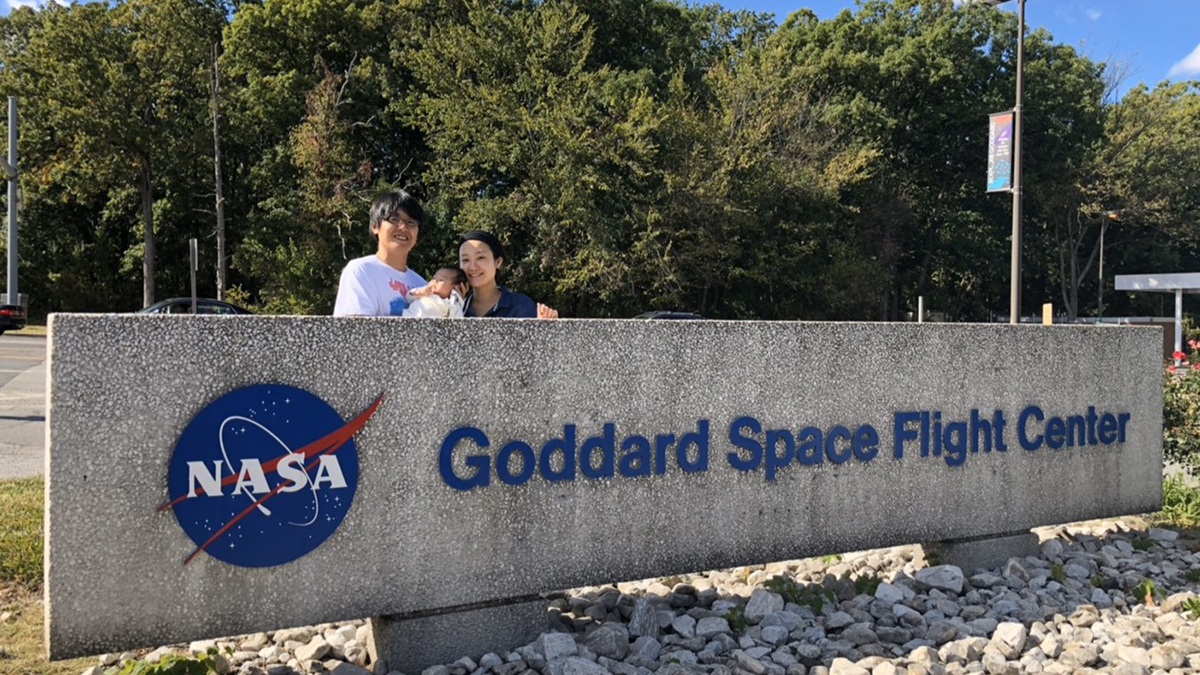
For several years before joining Meiji University, I worked at NASA’s Goddard Space Flight Center in Maryland, USA. I belonged to a research group and was involved in developing a new X-ray observatory, a research field that is a direct application of physics. One female member of that research group, after working as an engineer, became an astronaut. Some graduates from the Department of Physics, School of Science and Technology at Meiji University have become university professors in astronomy or researchers at NASA. By learning the fundamentals of physics and how to technically apply them at a university department of physics, you can open up doors to a wide variety of roles in the space industry.
What is the connection between physics and the universe? Fundamentally, physics is the study of clarifying the mechanisms, properties, and laws in the natural world. For example, when you throw an object diagonally upward, it falls along a parabolic path. Using the equation for a parabola, you can predict where the object will be after a certain amount of time has passed. However, high school physics usually stops at demonstrating that an object’s behavior can be described mathematically. While you learn the mathematical formulas that describe phenomena, you do not explore the underlying, abstract questions, such as why things happen, what gravity and gravitational forces are, or how the world works. That is where the real fun of physics begins. University physics is about confronting these infinite questions, which leads directly to the study of the universe.
Two disciplines in astrophysics
Investigating the origins and laws of the universe is truly within the domain of physics. Looking up at the night sky, you may have wondered what stars and galaxies are, or whether black holes really exist. All of these questions are the subject of study in physics, particularly in astrophysics.
Astrophysics is roughly divided into two academic fields. One field is cosmology. The most famous cosmological theory is Einstein’s equations, a set of equations that form a crucial foundation for understanding the universe. Using these equations, humans only began to realize the universe was expanding in the 20th century – very recently in human history. Cosmology assumes that if the universe is expanding, it must have been small before, and studies how the universe began and how it evolved into its current state.
The other field is celestial physics. Outer space is like a vessel containing various forms of matter. We humans are also one form of matter within the vessel. Galaxies in space contain celestial bodies that are Earth-like stars, black holes, and neutron stars. When many galaxies gather, they form large celestial bodies called galaxy clusters, which are said to be filled with dark matter – a substance researchers still do not fully understand. Celestial physics studies the matter found in the universe. Both cosmology and celestial physics can be studied using physics.
University students active at JAXA and NASA
What do people other than researchers think about space? Many of them may feel it is not related to their daily lives.
However, as shown in the film Hidden Figures, a diverse range of people are actually involved in space-related work. In the future, more and more people with various abilities will enter this field.
JAXA’s roadmap for the next 20 years envisions space tourism for some 100 people in lunar orbit and manned scientific exploration missions to utilize lunar resources. This will happen when today’s high school students are in their 40s and leading society. I believe a time is coming when many people worldwide, not just from Japan, will be active in space.
Currently, universities work closely with JAXA and NASA, with students participating in research. Students in my laboratory are also conducting experiments as part of a joint research project with JAXA’s Institute of Space and Astronautical Science (ISAS), regularly visiting the institute to use its experimental equipment. They are conducting experiments in the development field, placing their own creations inside a vacuum chamber that replicates the space environment to evaluate their performance. We are also planning long-term research stays for our students at NASA next year. Universities are where you can work alongside world-class researchers; JAXA and NASA are closer than you think.
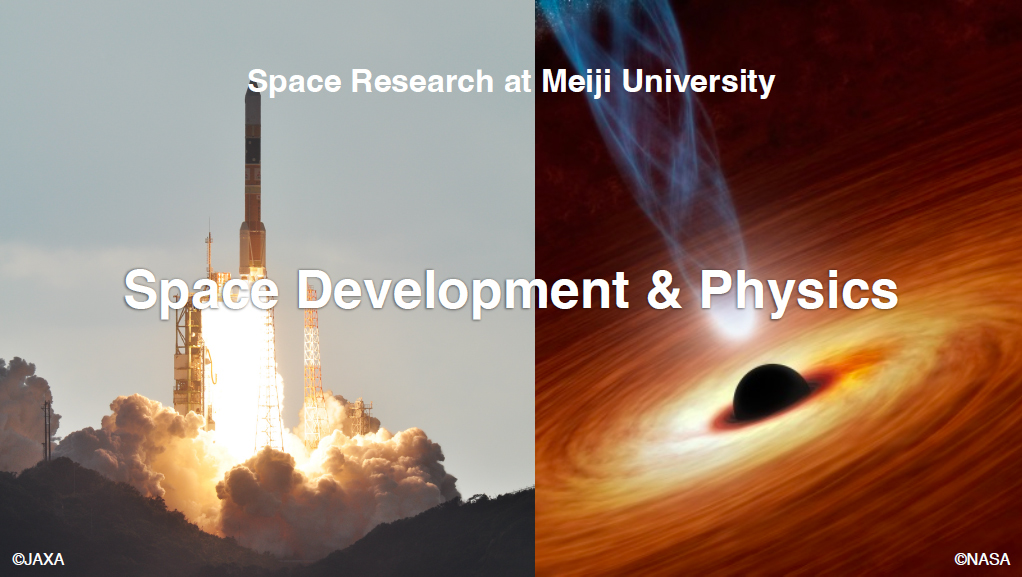
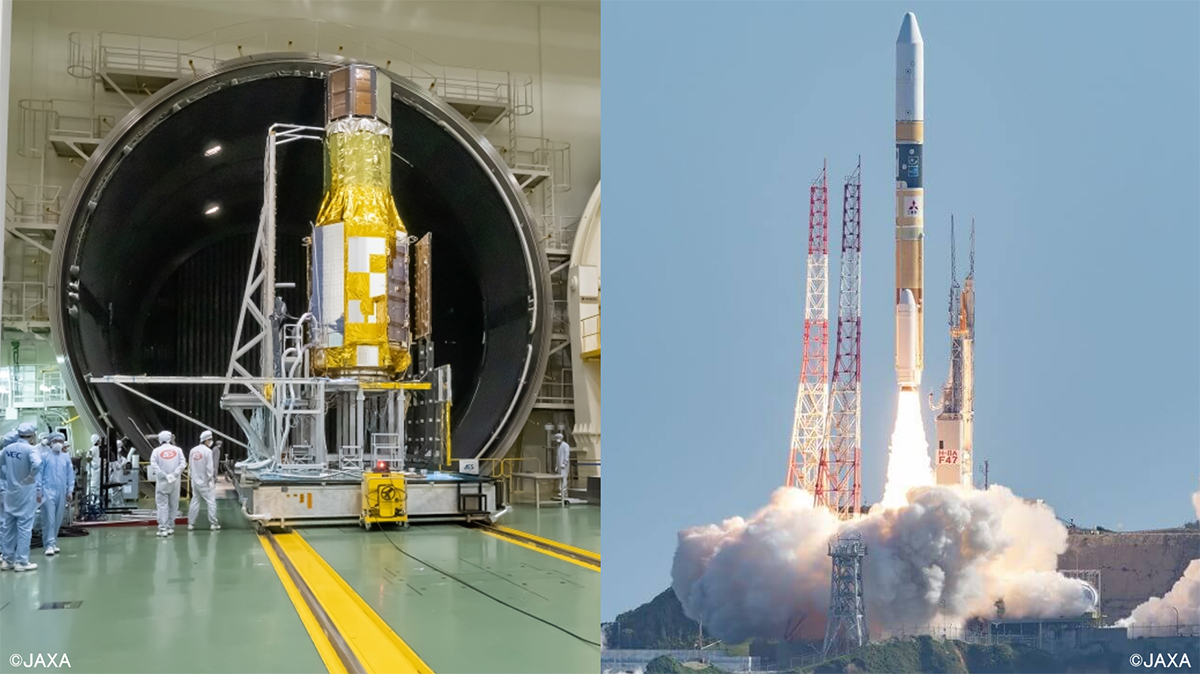
The launch of the XRISM satellite I involved in its development
I first became interested in physics and the universe in junior high school. At that time, I heard that the universe might be infinite. This made me wonder about the world I lived in and ask questions like how and why I existed in this world. Thinking about these questions made me want to learn about physics and the universe to understand the world.
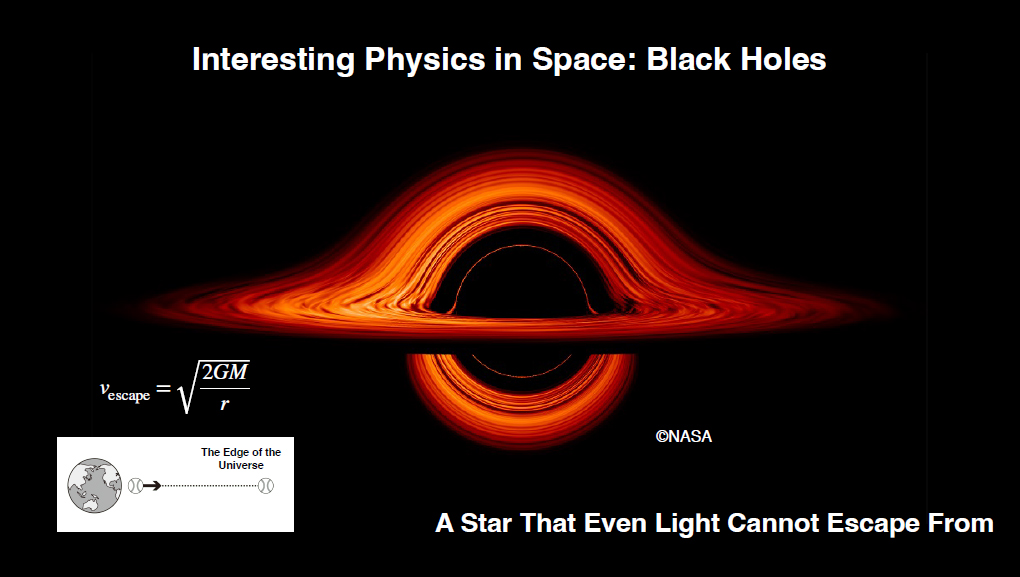
When you start connecting space and physics, you will find fascinating things emerging one after another. For example, black holes are celestial bodies so massive that they bend even light. We learn in school that light travels in straight lines, but when gravity is too strong, light cannot escape from gravity. To know these mysteries, you need knowledge of physics. Furthermore, 90% of the matter in the universe is still a mystery. Observing these unknown phenomena in the universe is incredibly exciting.
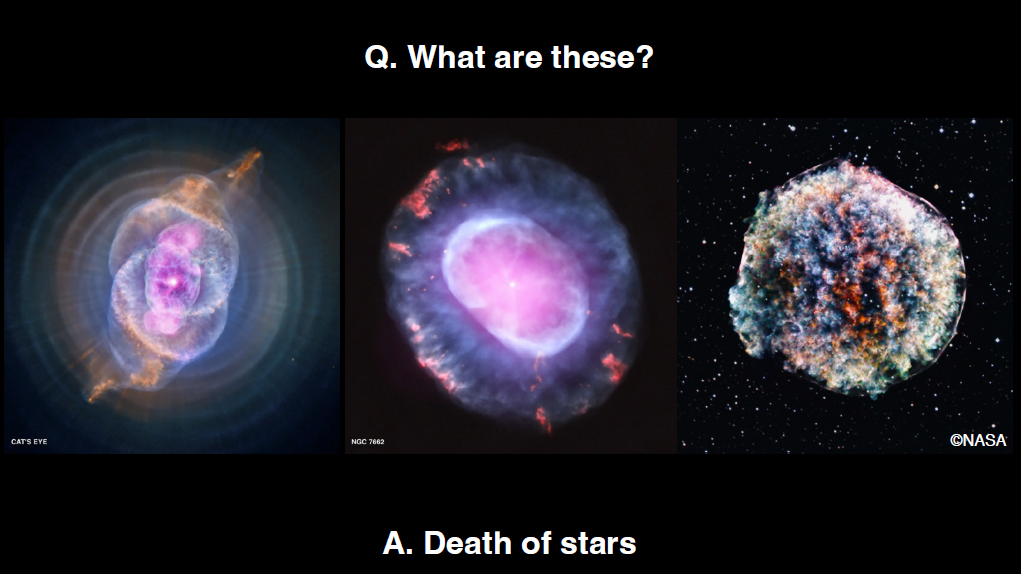
Even the origins of life like us are hidden in space. When stars die and explode, they scatter material, which becomes the building blocks for new stars. It is believed that as this cycle repeats, matter evolves, eventually forming the substances that make up our own bodies, which then spread over the universe.
In this way, the universe is full of mysteries and there are many areas of research to explore. In my lab at Meiji University, we mainly develop X-ray telescopes and observe stellar remnants. An X-ray telescope is a telescope designed to observe X-rays emitted from space. X-rays have high energy and reveal information that cannot be seen with visible light. They allow us to see various things like the area around black holes, galaxies and galaxy clusters, and the remains of supernovas. However, unlike visible light, X-rays are absorbed by the Earth’s atmosphere, so we must launch the telescope to a high altitude to make an observation. This means we need to learn about space development while also deepening our understanding of space. The exciting thing about our research is that it enables us to widely learn space development and space science.
The XRISM satellite, whose development I worked on at NASA, was successfully launched by JAXA in the summer of 2023. It is observing various celestial objects in space now. This was a global effort; we transported the telescope built in the United States to Japan, installed it onto the satellite body at the Tsukuba Space Center. Then, it was launched. The installation required precise calculations by micron accuracy, and we collaborated with companies, achieving a successful launch. The XRISM satellite has already yielded important discoveries and results concerning life forms, Earth’s environment, and stellar activity through observation data, making it a world-leading astrophysics project. As the sub-leader of the astronomical observation team, I want to provide my students with opportunities to learn through these international projects and fly high on the global stage.
Physics knowledge: The foundation for unraveling mysteries
Finally, as an introduction to the field of astrophysics, I will talk about our familiar Sun. How does it shine? This mystery was only solved about 100 years ago. The age of the Sun is known to be 4.6 billion years. If the Sun were a celestial body burning through simple chemical reactions, it would last only 6,000 years. However, we know through various measurements that the Sun has existed for so many years, so there must be a longer-lasting energy source. The answer lies in nuclear fusion – the conversion of mass into energy, occurring when light atomic nuclei fuse to form a heavier nucleus.
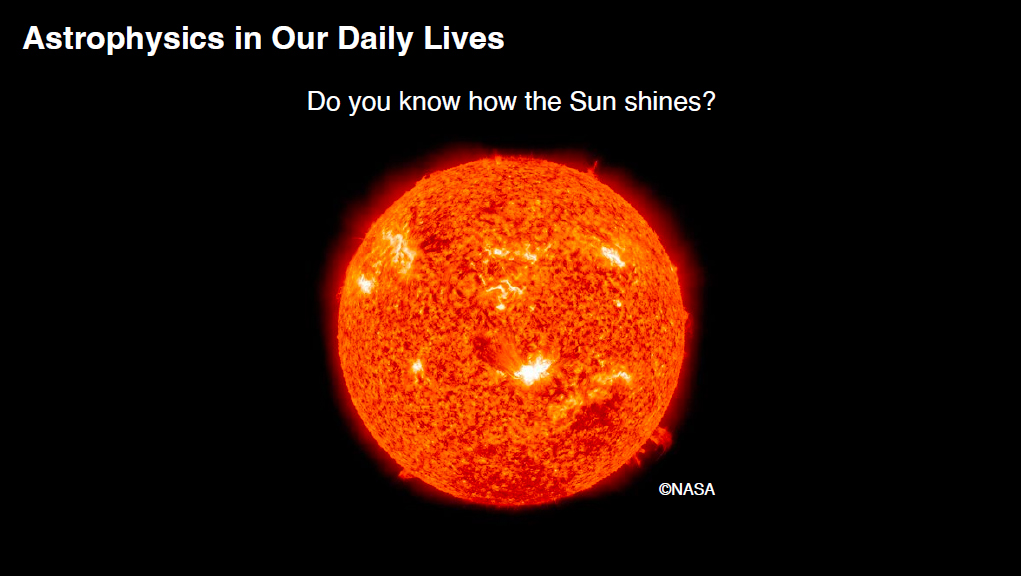
To really understand why the Sun shines, you need to learn university-level physics knowledge, at least the fundamentals of relativity, quantum mechanics, and thermodynamics statistical mechanics. You can learn the foundations for solving the mysteries of our world such as space at a university department of physics, and these fundamentals open doors to various career paths.
Some people may doubt that studying space or physics is useful in the real world. I should think those people may work in jobs that do not use that knowledge and they simply have not learned how to apply that knowledge yet. If you pursue what you love, you will find countless ways it connects to the future, and you might discover things that only you can do. I encourage you to study what you find truly interesting. I would be delighted if that interest led you to the world of space and physics.
Information noted in the articles and videos, such as positions and affiliations, are current at the time of production.
