

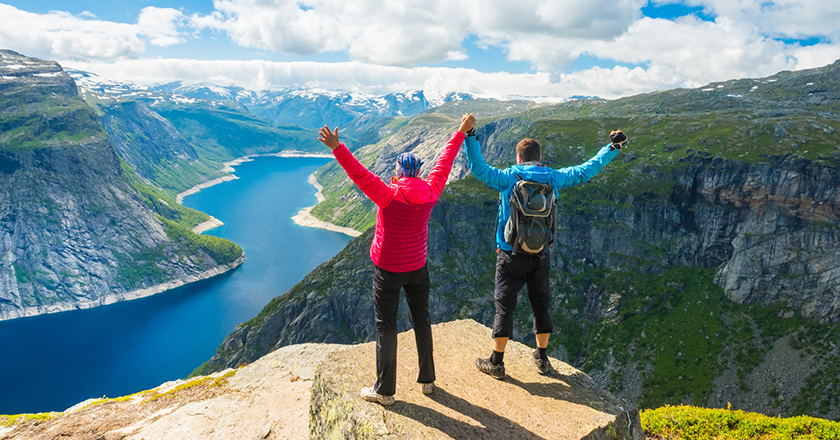
Friluftsliv, a culture embraced by Norwegians
I specialize in outdoor education and am interested especially in the relationship between people and nature. Specifically, I have an interest in friluftsliv, the activities and philosophy passed down in Norway.
Some even call it part of the Norwegian identity, and 2024 statistics show that 96% of the citizens participate in some form of friluftsliv throughout the year. It is a culture that is deeply integrated into people’s daily lives.
Friluftsliv can be roughly translated as “outdoor activities” or “nature experience activities.” However, it is not that easy to reproduce its exact meaning. In Norwegian, many words are combined to form a single word, and friluftsliv is also made up of fri (freedom), luft (air) and liv (life). In English, it means “free-air-life” or “open-air-life,” which suggests life in the outdoors. In other words, it is not merely a leisure activity, but is understood as a lifestyle that embraces and enjoys spending time in nature itself.
What characterizes it is that it is not limited to intensive outdoor exercise and long expeditions. In addition to adventurous mountain climbing and camping, friluftsliv includes a wide range of activities such as simply walking in the woods or spending a quiet time by a lake. I personally find that it has something in common with Japanese traditional outdoor pastimes and the culture of enjoying nature throughout the seasons.
The definition that the Norwegian Environment Agency provided in 1986 describes it as activities in nature for leisure or exercise, aimed at experiencing environmental changes and connecting with nature. Examples include hunting, fishing, berry picking and other hunting-gathering activities, as well as common outdoor activities such as skiing and cycling.
Some researchers propose principles such as no mechanical transportation, no competition, and no harm to the natural environment. The idea is that friluftsliv is meant purely for enjoyment, not for other purposes, such as competition, training, or education. Nevertheless, connecting deeply with nature results in a variety of educational benefits.
In Norway, friluftsliv is indeed incorporated into the curriculum from kindergarten through university. In Alta, a city in the Arctic Circle where I stayed, children dressed in winter overalls still went to kindergarten merrily in the darkness at minus 20 degrees Celsius during the polar night period, when the sun does not rise. It is normal to play in the kindergarten yard or outdoors, and childcare that actively makes use of nature is widely practiced.
Norway coexists with nature, whereas Japan owns it
When comparing Norway and Japan, one of the biggest differences is population density. It is undeniable that Norway’s low population density makes it possible to have such leisurely activities. Therefore, it is unreasonable to directly apply it to Japan and make a comparison, yet there are some aspects that Japan can learn from.
In Norway, there are secluded mountains and forests within walking distance of the city, and the habit of trekking or cross-country skiing has become part of life, much like going for a walk. Without the need for special preparations or long-distance travel, nature exists right next to their daily lives.
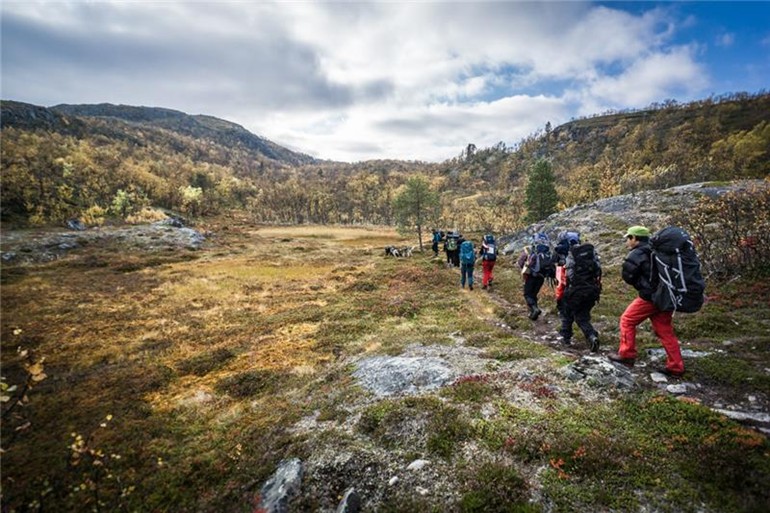
This situation, in which nature is closely connected to the living area, strongly supports the friluftsliv culture. The commitment to protecting nature is also clearly reflected in urban planning. For example, in Oslo, the capital, non-development zones have been established around the city, where the land must remain untouched, preserving forests even in urban areas.
It is also important to note that the common law of right to roam exists in several European countries, including Norway. While the name and implementation vary by country, it is based on the idea that nature is an essential resource for everyone and should be accessible and usable by all unconditionally.
Norway’s right to roam includes the right to pass through, the right to stay (lodge) in nature, and the right to harvest. The Outdoor Recreation Act (Friluftsloven), enacted in 1957, allows people to walk or ski freely in the countryside and to canoe or kayak on lakes and rivers. Camping in a tent is permitted under certain conditions, and swimming in the sea or lakes is also allowed. It is precisely because these comprehensive rights are institutionally guaranteed that a culture has been developed in which individuals can freely enjoy themselves.
Meanwhile, in Japan, the use of nature is often discussed with a focus on regulation. For example, with regard to Mt. Fuji, tolls and entry restrictions were introduced to control overtourism and non-stop climbing. While these are understandable from the perspectives of safety and environmental conservation, the underlying question of who owns nature is rarely addressed. In many cases, landowners’ rights are relatively prioritized, and as a result, the freedom of those who want to enjoy nature is often restricted. This contrast highlights the difference in values between Norway and modern Japan.
If you experience friluftsliv from a young age, you will naturally develop the knowledge and skills to avoid harming nature. In Norway, skills for coexisting with nature, such as how to dispose of waste, properly put out fires, and avoid bringing more than necessary, have been widely established. I believe that this is why most people there can coexist with nature effortlessly.
Friluftsliv overlaps with the Japanese traditional view of nature
A major difference from outdoor activities in Japan is that Norwegian friluftsliv has an ideological and philosophical background. Beyond simply playing in nature and getting close to nature, there is a theory behind these practices that supports views of nature and humanity. A typical example of this is deep ecology, proposed by the philosopher Arne Næss.
Næss saw the root of the global environmental crisis in anthropocentrism and advocated biospherical egalitarianism, in which all life on Earth has equal value. What is interesting is that Næss himself was an avid climber and stated that his experience of friluftsliv in nature was the very origin of his philosophy.
What is more, Næss and other deep ecology philosophers went beyond the laboratory to engage in actual nature conservation activities. For example, researchers, friluftsliv leaders, and local practitioners joined together in a civic campaign against the construction of a dam, translating the idea of coexistence with nature into social action.
This stands in contrast to outdoor activities and education in Japan. Experiential learning in Japan mainly uses nature as a setting for education, and nature itself is rarely considered as a living space. On the other hand, friluftsliv is closer to the idea of humans participating in the biosphere itself, rather than regarding nature as an educational tool.
Furthermore, the connection to sustainability is also essential for understanding friluftsliv. It was Gro Harlem Brundtland, then Prime Minister of Norway, who chaired the World Commission on Environment and Development, which proposed the concept of sustainable development to the United Nations in the 1980s. According to her books, her strong interest in nature conservation stemmed largely from a wilderness hike with friends during her elementary school years, which demonstrates the close connection between friluftsliv and environmental policy.
As mentioned above, friluftsliv is deeply connected to the identity and mindset of Norwegians. What I recognized while studying in Norway was that this view of nature actually overlaps with traditional Japanese senses.
In Japan, it used to be common for homes to have a vague boundary between indoors and outdoors. People lived in close connection with nature, sunbathing on the veranda and going for a walk through the fields in sandals. Cherry blossom viewing, swimming in the sea, autumn leaf viewing, and wild vegetable gathering can also be seen as a Japanese-style friluftsliv.
Although the population densities differ, Norway and Japan are both located on the edge of the continent and have a similar land area. They actually have quite a lot in common as they both face the sea, have steep mountains, and offer skiing in winter. This makes me believe that there is plenty of room for Japan to regain a friluftsliv-like lifestyle even in modern urban life.
This means bringing a little nature back into our daily lives, rather than having extraordinary outdoor activities that require special equipment or planning. For instance, walking along a neighborhood greenway or river, or taking a walk, noticing the changing seasons – such everyday actions can also foster a sense of living together with nature.
Human beings can only live because nature exists. As a reminder of this simple fact, friluftsliv may be what modern Japanese society needs.
* The information contained herein is current as of October 2025.
* The contents of articles on Meiji.net are based on the personal ideas and opinions of the author and do not indicate the official opinion of Meiji University.
* I work to achieve SDGs related to the educational and research themes that I am currently engaged in.
Information noted in the articles and videos, such as positions and affiliations, are current at the time of production.